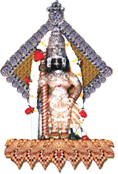


The town of Udupi and the Karnataka state have been made memorable in Indian history by the life and teachings of the Vedantic philosopher, Sri. Madhwacharya. He was the exponent of the school of Vedanta, popularly known as ‘Dvaita’ philosophy, as distinct from ‘Advaita’ of Sri. Shankaracharya and ‘Vishistadvaita’ of Sri. Ramanujacharya. He was also the founder of the eight Mathas, ordained for worship of Lord Krishna in Udupi, along with exposition of his Vedantic doctrines.
‘Dvaita’ is the popular name of Madhwacharya’s philosophy. The term ‘Dvaita’ is adopted to indicate the dualism or the difference between God and individual souls, emphasised by this Acharya. But this difference between God and soul is only one of the doctrines of his philosophy. Sri Vadiraja Swami, the illustrious monk of Madhwacharya’s lineage, had used the term “Tatva Vada” for this philosophy. It is also called ‘Vaishnava Siddhanta’ as distinguished from ‘Mayavada’ or ‘Illusionism’, propagated by the Advaita school of Vedanta.
Madhwacharya wrote several books in Samskrita language to expound his philosophy, and composed excellent devotional hymns. He was a most learned Samskrita scholar and a profound philosopher. I am neither a Samskrita Scholar, nor a properly qualified student of philosophy. Therefore I am not competent to present Madhwacharya’s teachings in the manner which philosophy as a discipline calls for.
I shall simply dwell upon some salient features of his philosophy, which, I feel, are relevant to this symposium.
Madhwa’s Uncompromising Monotheism : Supremacy Of God
First and foremost, Madhwa’s philosophy is an uncompromising monotheism. This monotheism, according to him, is the central teaching of all sacred scriptures. He ascribes all phenomena of our experience, ultimately and fundamentally, to the power and grace of a single, supreme, Independent Reality, namely God, whom he calls ‘Vishnu’ or Narayana, Vishnu in Samskrita means Omnipresent and Omnipotent. Narayana means a repository of infinite perfect qualities, devoid of all defects and the goal to be realised and reached by all good souls.
In his magnum opus, ‘Anu Vyakhyana’ Madhwacahrya has summed up the central teaching of scriptures in a few verses, which may be translated as follows :
“Vishnu or God is ‘Guna-poorna’, or full of infinite good qualities. He is free of all limitations. He is the absolutely Independent Creator, Sustainer, Controller, Destroyer Enlightener and Liberator of everything else. He is quite distinct from all other beings, who totally depend on Him”.
While enumerating various metaphysical categories in his work called ‘Tatva Sankhyana’, Madhvacharya declares that God is a category by himself, called ‘Svatantra’ or Independent. The independent character of God is repeatedly emphasised by him as a fundamental tenet of his philosophy. In a particular context in his work, “Anu-Vyakhyana”, he proclaims : “Any proposition which is inconsistent with the sovereign independence of God should be rejected as false. Consistency with Divine majesty is itself the criterion of truth. All proof and authorities should be interpreted in the light of the Supremacy or Sarvotthamatva of God, which should not be compromised at any cost”.
In a famous hymn called ‘Dwadasha Stotra’, Madhwacahrya proclaims as follows :
“Past actions, ignorance, afflictions, time, modes of nature etc. are not the primary factors of human bondage. For it is well known that these are not sentient. The scriptures declare that it is God alone who controls the entire universe of living and non-living beings in every context”.
Hindu Pantheon In The Light Of Madhva’s Monotheism
Madhva was an apostle of love of God everywhere. Furthermore, he advocated love, respect and devotion to all higher values of life and all higher beings. Therefore he has prescribed worship of several minor gods, rishis, manes and angels of the Hindu pantheon. But he has strictly enjoined that, this worship should not compromise one’s highest devotion to the Almighty. All other gods, rishis, saints etc. are dependent on the Supreme creative power of the Almighty. They are mere superior souls – superior to human beings – but infinitely inferior to the Supreme Divinity. Their abode is not a state of salvation or heaven in the true sense of the term. They should be loved and adored as superior devotees of God, and as the Divine retinue – ‘Parivara’ – who guide us on the pathway to God.
Image-Worship According To Madhwa
Image-worship is a time-honoured devotional practice of the Hindu tradition. Madhwacharya has set down the correct way of worshipping images in the light of his concept of God. As God is omnipresent and full of grace, His presence can be invoked by genuine devotees in all symbols or images. All living and non-living beings are potential images of God. But Madhvacharya has warned the devotees against the heresy of ignoring the distinction between the Almighty God and his image. God should be visualised as the unique Indweller of any image – physical or mental. Man was made in the image of God, but man can never claim to be God. Particular procedures and rituals are prescribed for invoking God prior to worship in an image.
Primacy Of Devotion To God And Devine Grace
As all creation is absolutely dependent on God, Madhwacharya has accorded the highest rank to sincere devotion and prayer to God as the essence of all ethical and spiritual disciplines. It is only genuine devotion that moves God to shower His grace on the soul. As the soul’s bondage in this world is the fiat of the Divine will, the release from bondage is also ascribed to Divine grace, as the ultimate factor. Bhakti or devotion alone can attract to oneself the grace of God.
Bhakti is defined by Madhva as “the firm and unshakable love of God, which rises above all other ties of affection, based upon an adequate knowledge and conviction of His supreme majesty. That alone is the primary means of liberation”. (Mahabharata Tatparya Nirnaya’ of Madhva).
The emphasis on Divine Grace acquired through Bhakti is an echo of the proclamation of one of the Upanishads, namely Kathopanishad.
The Upanishad proclaims: “Whomsoever God chooses, by him alone, He can be attained”.
In his commentary on “Bhagavatha Purana”, Madhwacharya has elucidated the different modes of Bhakti, such as –
1.Hearing about God’s majesty from learned discourses on scriptures.
2.Singing His praise collectively.
3.Silent remembrance of God through repetition of His name.
4.Service of holy persons and one’s fellow-beings.
5.Worship of holy images of God
6.Salutation of His presence in all beings
7.Attitude of service of God through all normal duties of one’s life
8.Entertaining intimacy with Him as our inseparable companion
9.Wholehearted surrender to His will
Different stages of Bhakti and Divine Grace have been distinguished by the Acharya in Anu-Vyakhyana and other works as follows:
1) First, the devotion and Divine grace which precede the general understanding of the teachings about God found in the scriptures.
2) Second, the devotion and Divine grace which follow a critical study and correct understanding of the supremacy of God, found in the scriptures.
3) Third, the devotion and Divine grace following deep meditation on God’s supreme majesty, leading to direct vision of God.
4) Fourth, devotion and Divine grace following direct experience of God’s supremacy, with the utmost warmth of love and attraction .Such devotion and Divine grace bring about salvation. .Devotion in the state of salvation becomes spontaneous, and an end in itself.
Five fold difference: ‘Bheda’
Another important feature of Madhwa’s philosophy is its emphasis on the innumerable differences among the phenomena of this universe, and the unique difference between God and His creation. Accordingly, Madhwacharya’s philosophy is characterised as a variant of dualism and pluralism. He classifies the innumerable differences in the cosmos into five major categories, called ‘Pancha Bheda’ as follows :
1.Differences between God and individual souls.
2.Differences among individual souls.
3.Difference, between individual souls and material objects including their mortal bodies.
4.Differences between God and material objects such as language, scriptures, space, time, physical nature and all products of nature.
5.Differences among material objects.
(Madhwa’s ‘VISHNU-TATVA-NIRNAYA’)
Individual souls, according to Madhva are quite distinct from God as well as their mortal ,material bodies. They are eternal and their spiritual essence is not mortal. They are in a state of continuous dependence of God in bondage as well as salvation. God is the prototype of everything else. All living and non-living beings are images of God, quite distinct from him.
Reality Of The World – Monotheistic Realism
The scheme of five-fold difference spelled out by Madhva implies that this diversity of the world, perceived by our senses, is not an illusion or magic or Maya. Madhva is never tired of quoting numerous statements from scriptures, confirming the creation, preservation, regulation and control of the world of matter and souls by a Supreme Divinity. The material world is the field or environment provided by God for the spiritual development of individual souls encased in mortal bodies. God cannot, possibly, provide and illusory condition for real development. He is immanent in the material world and in every soul, though He transcends all limitations of mortal life.
In his devotional hymn, called ‘Dwadasha Stotra’ Madhwacharya exhorts us that we should look upon this wonderful diversity of God’s creation as a concrete evidence of His numerous powers.
In this sense, Madhwa’s philosophy is regarded as Monotheistic, all-inclusive realism. By virtue of his all-inclusive realism and pluralism, Madhva presents himself as an environmentalist par excellence, as he recognizes and seeks to uphold all types of diversity, heterogeneity, and differences found in God’s creation. He seeks to preserve and promote diversity at all levels – physical, biological, psychological, cultural, religious and spiritual.
A philosophy of gradation : ‘Taratamya’
Finally, Madhva’s philosophy is a philosophy of relations and degrees. In other words, he draws our attention not only to the infinite diversity of the universe, but also to a system of gradation or hierarchy inherent in the contents of the universe.
He has unravelled the elaborate hierarchy of Gods, rishis, manes, angels, men, animals and demons who are instrumental in the process of manifestation and dissolution of the universe. In this cosmic process, a soul with a lower degree of worth in the spiritual hierarchy is subject to control and guidance by souls of higher degree of worth. For instance, the spiritual evolution of normal human beings is guided and controlled by angels,manes, rishis, and gods, who function from higher planes of devotion to the Almighty.
This doctrine of spiritual gradation should not be confused with any cult of social or political stratification, which permit exclusive religious privileges to a few persons or groups. It is not at all a social, political or legal ideology. It is a purely spiritual insight, revealing and appraising the spiritual capacity of a person to love God and his fellow-beings. Greater the capacity and intensity of love and devotion, the greater is the rank of a person in God’s dispensation. Compassion, generosity, love and devotion to God are the very essence of a good soul. God’s grace is bestowed on a person, strictly in proportion to his capacity to love God and His creation.
Problem of evil in Madhwa’s view :
The problem of evil is the most difficult hurdle in the way of all religious world-views. Madhwacharya has offered his own original explanation and method for resolving this problem.
Madhwa traces the problem of evil to the threefold categorization of souls in the scheme of spiritual gradation, inherent in the contents of the universe. There are three categories of souls. The first category consists of sattwik or essentially good souls. They are fit for spiritual progress and salvation. The second category consists of ‘Rajasa’ or essentially indifferent souls, who are not convinced about God’s greatness. They indulge and stagnate in worldly life for ever. The third category comprises ‘Tamasa’ or essentially evil souls, who have a repulsion to God and good life. They are condemned to eternal hell in due course.
Most of the evils found in this world, according to Madhwacharya, are the result of the unmitigated evil actions of the evil souls. Even good souls fall prey to the devilish temptations of evil souls. Even material objects and mental and spiritual tendencies are classified by Madhwacharya into good, indifferent and evil categories, according to their association with good, indifferent and evil souls.
The concept of evil souls has a parallel in Christianity. It is similar to the dreadful actions and influences of the Devil or ‘Satan’ according to the Christian tradition.
Religious persons, whatever their religion, should be on guard against the temptations of the Devil. For, the devil not only tempts us to commit sins, but also banish all religions sentiments and good life from the face of the earth.
I would like to conclude this speech with the witty remark of a Christian scholar [FULTON SHEEN], quoted by a Hindu scholar [Prof. B. NAGESHA RAO] in an exposition of Madhwacharya’s devotional doctrines.
The remark is as follows :
“Very few people believe in the Devil and his brood these days. That suits the devil very much. Satan has very little trouble with these who do not believe in him, because they are already on his side”.
– by Late Prof. Shreesha Ballal
I’m a Madhwa Brahmin. Dwaita is applicable to materialistic world, its tersely logical but when it comes to spirituality, Sadhak – the person is totally detached to all the sensory thoughts, pain & pleasure, who is completely immersed in God doesn’t feel the existence of earth and related issues though, the existence of earth is real. That’s all i have to say. Jai Dattatreya
We know the categories of souls? But explain, how evil came to be? If Brahman possesses infinite auspicious attributes, where did the negative attributes come from?
I don’t think there are any differences among souls. Soul of any living being can be likened to be of the rainfall which has not reached earth, once the rain reaches the earth the water acquires the attributes of the materials or anything which it falls upon. Mind is the underlying cause for all kinds of sorrows. So, its equally important for us to keep in good condition by not entertaining unwanted vice thoughts n by regularly doing meditation. Jai Dattatreya
@RAJESH MENON – We indeed know the category of souls. Evils are in existence since beginningless. Its similar to a seed which has some characterictics and cannot be changed. Lord brahman simply energisizes it from within and the seed grows as per characteristics. There is not such thing as negative attribute. All attributes are relative.
@Sanjay – It is not right to say “there are no differences among souls”. There is and there will be forever. As Per Acharya madhwa, every Soul has intrinsic characters and cannot be changed forever.
Is evil an aspect of ignorance or does it have an independent existence? Will unconditional surrender to the Supreme Lord transform evil into good?
All religious ideas are what they are -just ideas. Why something exists – because it can. So is evil and good. God and other ideas are just human beliefs. Thanks.