
Composer: Sriman Madhvacharya
Translator: Sri NAPS Rao
Source: dvaita dot org
Download Dwaadasha Stotras : English | Kannada | Sanskrit | English + Sanskrit
Dwaadasha stotras are a collection of twelve stotras in praise of Lord Sri Vishnu, composed by Srimad Ananda Teertha (also called Sriman Madhwacharya and Sri Poornaprajna). This collection is collectively counted as one of his 37 works, and is said to encapsulate the doctrine of Tattvavaada to a great deal of depth.
Popular tradition has it that the Dwaadasha Stotras were composed at the time of the installation by him of the Sri Krishna icon at Udupi.
Each word of Dwaadasha Stotras can be interpreted in several ways, in accordance with recognized rules of grammar; each verse is also evocative of many works by Srimad Acharya when studied with care and analyzed. In expressing such thoughts in English or other colloquial language, the limitations of the language sought to be used may also be barriers, to overcome which needs one to have patience and perseverance.
Sriman Madhvacharya’s texts are extremely brief, terse, and usually associated with a number of meanings which do not conflict with each other, but are all separately supportive to his philosophy of Tattvavaada.
An attempt at direct translation, if carried out with an open mind and some competence, usually yields the main gist of the text. But the depth and width of the material usually escapes one, until he is aided by the extremely detailed and powerful commentaries on Srimad Acharya’s works.
There are texts where up to 8 different and valid meanings have been given, all within the rules of textual interpretation and grammar.
The circumstances of the Dwaadasha Stotras’ creation
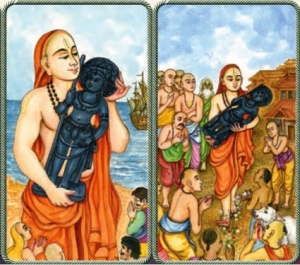
The exact circumstances under which the stotras were composed are not known to a certainty, and various conflicting accounts exist. One popular account is that once, when Srimad Anandateertha was meditating at what is now called the Malpe beach (near Udupi), a ship in distress in the sea came to his attention; he waved his upper garment, causing the fearsome winds and the angry seas to subside, enabling the ship to reach the shore safely with its cargo and crew intact.
The grateful captain of the ship, realizing the debt of gratitude he owed to Srimad Acharya, offered the latter gifts; however, Sri Acharya refused gifts of wealth, but asked for a large mound of gopi-chandana that had served as part of the ship’s ballast.
The mound contained the long-concealed icon of Sri Krishna which in the Dwapara Yuga had been worshipped by His own consort Rukmini devi. This icon was carried to Udupi and installed there by Sri Madhwacharya, and the Dvaadasha stotras were composed by him on this occasion.
There are other, somewhat less common, variants of this account of the circumstances of the stotras’ composition, such as one according to which the first seven stotras had already been composed before the saving of the ship, and the rest were composed later.
Occasions for the Dwaadasha Stotras’ recitation
The Dwaadasha Stotras are sung in a musical note during the event of ‘naivedya’ or ceremonial offering of food to Lord Vishnu, not only in Udupi Krishna temple, but also in practically all Maadhva temples and homes.
Extracts from the Dwaadasha stotras, containing the highly condensed and encapsulated philosophy of Tattvavaada, are also recited on other occasions such as Hari-Katha discussions.
With this background, we shall now look into explanations of each verse of DwAdasha Stotras in next pages.
Stotra 1
ವಂದೇ ವಂದ್ಯಂ ಸದಾನಂದಂ ವಾಸುದೇವಂ ನಿರಂಜನಂ
ಇಂದಿರಾಪತಿಮಾದ್ಯಾದಿ ವರದೇಶ ವರಪ್ರದಮ್ || ೧.೧ ||
vaMdE vaMdyaM sadAnaMdaM vAsudEvaM niraMjanaM
iMdirApatimAdyAdi varadEsha varapradam || 1.1 ||
I offer my salutations always to Sri Krishna, the son of Vasudeva and consort of Sri Lakshmi, who is always fit for such prostration, who is full of bliss and other auspicious qualities, and is without any blemish or defect, and is the giver of great boons such as Moksha to Gods like Brahma, who are themselves known as givers of boons to others.
The conviction that Lord Krishna is supreme, without blemish and can give us the greatest gift which we can aspire, will lead to our praying Him rather than any one else and will also make us disinterested in worldly boons – just as some one who has access to the emperor will not seek some minor favors from a lesser official.
ನಮಾಮಿ ನಿಖಿಲಾಧೀಶ ಕಿರೀಟಾಘೃಷ್ಟಪೀಠವತ್ |
ಹೃತ್ತಮಃ ಶಮನೇsರ್ಕಾಭಂ ಶ್ರೀಪತೇಃ ಪಾದಪಂಕಜಮ್ || ೧.೨ ||
namAmi nikhilAdheesha kirITAghRuShTapeeThavat |
hRuttamaH shamanE&rkAbhaM shrIpatEH pAdapaMkajam || 1.2 ||
The feet of the Lord of Shree are like the effulgent Sun in dispelling the darkness of the mind called ajnaana, and rests on a pedestal which is touched frequently by the crowns on the heads of the great gods like Brahma and Rudra who are the masters of the world. (when they prostrate with deep devotion before Him.)
ಜಾಂಬೂನದಾಂಬರಾಧಾರಂ ನಿತಂಬಂ ಚಿಂತ್ಯಮೀಶಿತುಃ
ಸ್ವರ್ಣಮಂಜೀರಸಂವೀತಂ ಆರೂಢಂ ಜಗದಂಬಯಾ || ೧.೩ ||
jAMbUnadAMbarAdhAraM nitaMbaM chiMtyameeshituH
swarNamaMjeerasaMveetaM ArUDhaM jagadaMbayA || 1.3 ||
The waist of the Lord is covered by a golden cloth and is surrounded by a golden waistband. Sri Lakshmi is always resting there sitting on His lap, with her hands round His waist. Such a waist is to be contemplated.
ಉದರಂ ಚಿಂತ್ಯಂ ಈಶಸ್ಯ ತನುತ್ವೇsಪಿ ಅಖಿಲಂಬರಮ್
ವಲಿತ್ರಯಾಂಕಿತಂ ನಿತ್ಯಂ ಆರೂಢಂ ಶ್ರಿಯೈಕಯಾ || 1.4 ||
udaraM chiMtyaM eeshasya tanutvEπ akhilaMbaram
valitrayAMkitaM nityaM ArUDhaM shriyaikayA || 1.4 ||
The stomach of the Lord looks slim and small, but holds the entire Universe. It also has three lines (Vali thrayaa) and is always embraced by Ramaa (Lakshmi dEvi). Such a stomach should be contemplated.
ಸ್ಮರಣೀಯಮುರೋ ವಿಷ್ಣೋಃ ಇಂದಿರಾವಾಸಮುತ್ತಮಮ್
ಅನಂತಂ ಅಂತವದಿವ ಭುಜಯೋರಂತರಂಗತಮ್ || ೧.೫ ||
smaraNeeyamurO viShNOH iMdirAvAsamuttamam
anaMtaM aMtavadiva bhujayOraMtaraMgatam || 1.5 ||
The chest of Lord Vishnu, who is all pervading and is the Lord of all, is the abode of Indira (Lakshmi dEvi) and is infinite in space and time, but is still spanned by the two arms (at either ends). Such a chest should be remembered.
ಶಂಖಚಕ್ರಗದಾಪದ್ಮ ಧರಾಶ್ಚಿಂತ್ಯಾ ಹರೇರ್ಭುಜಾಃ |
ಪೀನವೃತ್ತಾ ಜಗದ್ರಕ್ಷಾ ಕೇವಲೋದ್ಯೋಗಿನೋsನಿಶಮ್ || ೧.೬ ||
shaMkhachakragadApadma dharAshchiMtyA harErbhujAH |
peenavRuttA jagadrakShA kEvalOdyOginO&nisham || 1.6 ||
The four arms of the Lord wear the conch, discus, mace and the lotus and are round and full. Their main task is to protect the world always. Such arms should always be remembered.
ಸಂತತಂ ಚಿಂತಯೇತ್ಕಂಠಂ ಭಾಸ್ವತ್ಕೌಸ್ತುಭಭಾಸಕಮ್
ವೈಕುಂಠಸ್ಯಾಖಿಲಾ ವೇದಾ ಉದ್ಗೀರ್ಯಂತೇsನಿಶಂ ಯತಃ || ೧.೭ ||
saMtataM chiMtayEtkaMThaM bhAsvatkaustubhabhAsakam
vaikuMThasyAkhilA vEdA udgeeryaMtE&nishaM yataH || 1.7 ||
The neck of the Lord of Vaikunta (Narayana) is adorned with the brilliant Kaustubha Mani and is always reciting all the Vedas. Such a neck should always be contemplated.
ಸ್ಮರೇತ ಯಾಮಿನೀನಾಥ ಸಹಸ್ರಾಮಿತ ಕಾಂತಿಮತ್ |
ಭವತಾಪಾಪನೋದೀಡ್ಯಂ ಶ್ರೀಪತೇಃ ಮುಖಪಂಕಜಮ್ || ೧.೮ ||
smarEta yAmineenAtha sahasrAmita kAMtimat |
bhavatApApanOdeeDyaM shreepatEH mukhapaMkajam || 1.8 ||
The lotus like face of the Lord of Shri is effulgent with such brilliance that it can not be equaled even by thousands of full moons. It removes the sorrows of the worldly bonds and is very suitable for praise. Such a face should be remembered.
ಪೂರ್ಣಾನನ್ಯಸುಖೋದ್ಭಾಸಿಂ ಅಂದಸ್ಮಿತಮಧೀಶಿತುಃ |
ಗೋವಿಂದಸ್ಯ ಸದಾ ಚಿಂತ್ಯಂ ನಿತ್ಯಾನಂದಪದಪ್ರದಮ್ || ೧.೯ ||
pUrNAnanyasukhOdbhAsiM aMdasmitamadheeshituH |
gOviMdasya sadA chiMtyaM nityAnaMdapadapradam || 1.9 ||
There is a smile on the face of who is capable of giving the greatest gift of the coveted Moksha – the abode of eternal bliss, which is full and without any comparison. Such a smile should be contemplated.
ಸ್ಮರಾಮಿ ಭವಸಂತಾಪ ಹಾನಿದಾಮೃತಸಾಗರಮ್
ಪೂರ್ಣಾನಂದಸ್ಯ ರಾಮಸ್ಯ ಸಾನುರಾಗಾವಲೋಕನಮ್ || ೧.೧೦ ||
smarAmi bhavasaMtApa hAnidAmRutasAgaram
pUrNAnaMdasya rAmasya sAnurAgAvalOkanam || 1.10 ||
I think of the gracious and love-filled look of Sri Rama, who is Himself full of bliss. His kind look is like the ocean of nectar which can remove all the sorrows and miseries caused by SamsAra.
ಧ್ಯಾಯೇದಜಸ್ರಮೀಶಸ್ಯ ಪದ್ಮಜಾದಿಪ್ರತೀಕ್ಷಿತಮ್ |
ಭ್ರೂಭಂಗಂ ಪಾರಮೇಷ್ಠಯಾದಿ ಪದದಾಯಿ ವಿಮುಕ್ತಿದಮ್ || ೧.೧೧ ||
dhyAyEdajasramIshasya padmajAdipratIkShitam |
bhrUbhaMgaM pAramEShThayAdi padadAyi vimuktidam || 1.11 ||
The twitch of the eye brow of the Lord can give the highest positions like that of Chaturmukha Brahma and even Moksha. It is much waited upon even by Brahma and others. Such eye brows should be contemplated.
ಸಂತತಂ ಚಿಂತಯೇsನಂತಂ ಅಂತಕಾಲೇ ವಿಶೇಷತಃ
ನೈವೋದಾಪುಃ ಗೃಣಂತೋಂತಂ ಯದ್ಗುಣಾನಾಂ ಅಜಾದಯಃ || ೧.೧೨ ||
saMtataM chiMtayE&naMtaM aMtakAlE vishEShataH
naivOdApuH gRuNaMtO&MtaM yadguNAnAM ajAdayaH || 1.12 ||
Brahma and other great gods always praise the unique, great and extraordinary auspicious qualities of the Lord which has no end, and yet can never reach the position of having completely described or understood even one of these qualities. Such a paramAtma should always be remembered, especially when one is anticipating his death.
(This gives an indication that the last thoughts of a dying person, which can only be determined by his priorities in life, will have decisive effect on his future lives.)
ಇತಿ ಶ್ರೀಮದಾನಂದತೀರ್ಥ ಭಗವತ್ಪಾದಾಚಾರ್ಯ ವಿರಚಿತ ದ್ವಾದಶ ಸ್ತೋತ್ರೇಷು ಪ್ರಥಮ ಸ್ತೋತ್ರಂ ಸಂಪೂರ್ಣಮ್
iti shreemadAnaMdateertha bhagavatpAdAchArya virachita dvAdasha stOtrEShu prathama stOtraM saMpUrNam
End of the first of the 12 stotras composed by Sri Anandateertha bhagawatpAdAchArya
Stotra – 2
After offering his obeisance to Vasudeva (Krishna), Acharya Madhva describes the great and unique attributes of Sri Hari in the this second stotra. This has 9 verses.
ಸ್ವ(ಸು)ಜನೋದಧಿಸಂವೃದ್ಧಿ ಪೂರ್ಣಚಂದ್ರೋ ಗುಣಾರ್ಣವಃ |
ಅಮಂದಾನಂದ ಸಾಂದ್ರೋ ನಃ ಸದಾವ್ಯಾದಿಂದಿರಾಪತಿಃ || ೨.೧ ||
swa(su)janOdadhisaMvRuddhi pUrNachaMdrO guNArNavaH |
amaMdAnaMda sAMdrO naH sadAvyAdiMdirApatiH || 2.1 ||
The husband of Indira is like a full moon in creating tides in the oceans of the minds of good people (those who are equipped with Jnana, Bhakti and Vairagya). He Himself is an ocean of auspicious qualities. He is made of complete and flawless bliss and other qualities. May such Hari be pleased with us.
ರಮಾಚಕೋರೀವಿಧವೇ ದುಷ್ಟದರ್ಪೋದವಹ್ನಯೇ |
ಸಪ್ತಾಂಥಜನಗೇಹಾಯ ನಮೋ ನಾರಾಯಣಾಯ ತೇ || ೨.೨ ||
ramAchakOrIvidhavE duShTadarpOdavahnayE |
saptAMthajanagEhAya namO nArAyaNAya tE || 2.2 ||
This Narayana is like the moon which gives happiness to the Chakora bird called Ramaa, His consort. He is like the fire (in the oceans) which dries up the waters of the pride of evil persons. When people get tired on the way, they take shelter in a house, where they get shade, drinking water, food and rest along with being made to feel comfortable. In a similar manner He is the shelter of good persons who need rest from the sufferings of Samsaara. I offer my namskaara to such Narayana.
ಚಿದಚಿದ್ಭೇದಂ ಅಖಿಲಂ ವಿಧಾಯಾಧಾಯ ಭುಂಜತೇ
ಅವ್ಯಾಕೃತಗುಹಸ್ಥಾಯ ರಮಾಪ್ರಣಯಿನೇ ನಮಃ || ೨.೩ ||
chidachidbhEdaM akhilaM vidhAyAdhAya bhuMjatE
avyAkRutaguhasthAya ramApraNayinE namaH || 2.3 ||
This world consists of Chith (conscious) and inert entities with differences amongst them. He creates this world, protects it during its maintenance and destroys it in Universal dissolution (Pralaya). He is Himself unaffected by all this, though He is like a householder with this world. (Alternatively, He lives in a house Vaikunta, which is without any change – vikaara). He has a wife Ramaa, who is His beloved. I offer my salutations to Him.
ಅಮಂದಗುಣಸಾರೋಪಿ ಮಂದಹಾಸೇನ ವೀಕ್ಷಿತಃ
ನಿತ್ಯಮಿಂದಿರಯಾನಂದಸಾಂದ್ರೋ ಯೋ ನೌಮಿ ತಂ ಹರಿಮ್ || ೨.೪ ||
amaMdaguNasArOpi maMdahAsEna vIkShitaH
nityamiMdirayAnaMdasAMdrO yO naumi taM harim || 2.4 ||
When Indira looks at some one with a half smile, he attains the greatest position of ruling all the three worlds. Hari is also looked always by her with such a half smile, not to confer boons, but because of her eternal and umatched love for Him. He is Himself of the essence of divine bliss and is full of auspicious qualities. I prostrate before Him.
ವಶೀ ವಶೋ ನ ಕಸ್ಯಾಪಿ ಯೋsಜಿತೋ ವಿಜಿತಾಖಿಲಃ |
ಸರ್ವಕರ್ತಾ ನ ಕ್ರಿಯತೇ ತಂ ನಮಾಮಿ ರಮಾಪತಿಮ್ || ೨.೫ ||
vashI vashO na kasyApi yO&jitO vijitAkhilaH |
sarvakartA na kriyatE taM namAmi ramApatim || 2.5 ||
This Lord of Ramaa is the master of all, but does not have any master for Himself. He has won the entire world, but has never been defeated. He is the creator of the entire world, but He Himself was not created by anyone. I offer my prostrations to Him.
ಅಗುಣಾಯ ಗುಣೋದ್ರೇಕ ಸ್ವರೂಪಾಯಾದಿಕಾರಿಣೇ |
ವಿದಾರಿತಾರಿಸಂಘಾಯ ವಾಸುದೇವಾಯ ತೇ ನಮಃ || ೨.೬ ||
aguNAya guNOdrEka swaroopAyAdikAriNE |
vidAritArisaMghAya vAsudEvAya tE namaH || 2.6 ||
He is free from the effects of the three Gunas constituting prakruti (satva, rajas and tamas). He is full of auspicious qualities like jnAna, Ananda etc., in their unlimited forms (udreka). He is the creator of Chaturmukha Brahma, who is the creator of the world. He has destroyed all enemies – both internal and external to Him. I offer my prostrations to Him.
ಆದಿದೇವಾಯ ದೇವಾನಾಂ ಪತಯೇ ಸಾದಿತಾರಯೇ |
ಅನಾದ್ಯಜ್ಞಾನಪಾರಾಯ ನಮಃ ಪಾರಾವರಾಶ್ರಯ || ೨.೭||
AdidEvAya dEvAnAM patayE sAditArayE |
anAdyaj~jAnapArAya namaH pArAvarAshraya || 2.7||
He is the God who was present when no one else was there (before creation). He is the Lord of all the gods. He has destroyed all enemies. He is the destroyer of the beginningless Ajnana of the Jivas (when He takes them into His Moksha). He is greater than the great gods/goddesses like Ramaa, Brahma etc. I offer my prostrations to Him.
ಅಜಾಯ ಜನಯಿತ್ರೇsಸ್ಯ ವಿಜಿತಾಖಿಲದಾನವ |
ಅಜಾದಿ ಪೂಜ್ಯಪಾದಾಯ ನಮಸ್ತೇ ಗರುಡಧ್ವಜ || ೨.೮ ||
ajAya janayitrE&sya vijitAkhiladAnava |
ajAdi pUjyapAdAya namastE garuDadhvaja || 2.8 ||
You are not ever born, but create the entire world. You have won over all evil persons. You are worshipped by Chaturmukha Brahma and other gods. You use the flag emblem of Garuda. I offer my prostrations to you.
ಇಂದಿರಾಮಂದಸಾಂದ್ರಾಗ್ರ್ಯ ಕಟಾಕ್ಷಪ್ರೇಕ್ಷಿತಾತ್ಮನೇ |
ಅಸ್ಮಾದಿಷ್ಟೈಕ ಕಾರ್ಯಾಯ ಪೂರ್ಣಾಯ ಹರಯೇ ನಮಃ || ೨.೯ ||
ಇತಿ ಶ್ರೀಮದಾನಂದತೀರ್ಥ ಭಗವತ್ಪಾದಾಚಾರ್ಯ ವಿರಚಿತಂ ದ್ವಾದಶ ಸ್ತೋತ್ರೇಷು ದ್ವಿತೀಯ ಸ್ತೋತ್ರಂ ಸಂಪೂರ್ಣಮ್ ||
iMdirAmaMdasAMdrAgrya kaTAkShaprEkShitAtmanE |
asmAdiShTaika kAryAya pUrNAya harayE namaH || 2.9 ||
iti shreemadAnaMdateertha bhagavatpAdAchArya virachitaM dvAdasha stOtrEShu dviteeya stOtraM saMpUrNam ||
Goddess Indira smilingly gives her side glance (with the eyes) – Kataaksha, to you with complete love, devotion and unmatched quality. You are the most important desirable goal for us. You are complete with matchless attributes. You destroy the misery of your devotees. I offer my prostrations to you.
End of the second stotra of dvAdasha stotras composed by Sriman Madhvacharya
Stotra – 3
The third stotra is directed to the devotees and his disciples who are exhorted to follow the injunctions of the scriptures with understanding and devotion to attain God’s grace.
In the brief length of 9 simple looking shlokas, Acharya Madhva has condensed the Dos and Donts of life in a heart touching and convincing manner. The rejection of Kaamyakarma (worldly desires) leading to renunciation, performance of one’s prescribed duties without desiring the fruits there of (Nishkaama karma), recitation of God’s sacred name and prayers etc are the means to Moksha.
But the means themselves are powerless without His grace. The concept of Jaganmityatva (unreality of the world) is baseless. This and other propositions of tattvavAda have been covered in this stotra, leading to the conclusion most cherished of Srimadaachaarya that is, Sri Vishnu Sarvottamatva.
ಕುರು ಭುಂಕ್ಷ್ವ ಚ ಕರ್ಮ ನಿಜಂ ನಿಯತಂ ಹರಿಪಾದ ವಿನಮ್ರಧಿಯಾ ಸತತಂ |
ಹರಿರೇವ ಪರೋ ಹರಿರೇವ ಗುರುಃ ಹರಿರೇವ ಜಗತ್ ಪಿತೃಮಾತೃಗತಿಃ || ೩.೧ ||
tRuteeya stOtram
kuru bhuMkShva cha karma nijaM niyataM haripAda vinamradhiyA satataM |
harirEva parO harirEva guruH harirEva jagat pitRumAtRugatiH || 3.1 ||
Hari is the Supreme Being, Hari is the father and mother, Hari is the teacher and Hari alone is the final support for the souls. Therefore, do your prescribed duties always with reverence to the feet of the Lord. Accept the fruits there-of also with the same submission to His will.
The Creator is the father as he brings the souls into being as embodied beings. He is also the mother as He maintains their existence in the world. He is the Gathi or final destination for the souls after their sojourn in the world. He is the source of all knowledge as without Him, none of the Indriyas will exist (including the mind).
ನ ತತೋsಸ್ತ್ಯಪರಂ ಜಗದೀಡ್ಯತಮಂ ಪರಮಾತ್ಪರತಃ ಪುರುಷೋತ್ತಮತಃ |
ತದಲಂ ಬಹುಲೋಕವಿಚಿಂತನಯಾ ಪ್ರವಣಂ ಕುರು ಮಾನಸಮೀಶಪದೇ || ೩.೨ ||
na tatO&styaparaM jagadeeDyatamaM paramAtparataH puruShOttamataH |
tadalaM bahulOkavichiMtanayA pravaNaM kuru mAnasameeshapadE || 3.2 ||
There is no one else in the world of living and inert matter who is more appropriate for worshiping. He is superior to the superior beings like Brahma, Rudra etc. He is also the greatest Purusha or entity ever. Therefore, stop your thinking about worldly affairs and immerse your mind in contemplation of His lotus feet.
ಯತತೋsಪಿ ಹರೇಃ ಪದಸಂಸ್ಮರಣೇ ಸಕಲಂ ಹ್ಯಘಮಾಶು ಲಯಂ ವ್ರಜತಿ |
ಸ್ಮರತಸ್ತು ವಿಮುಕ್ತಿಪದಂ ಪರಮಂ ಸ್ಫುಟಮೇಷ್ಯತಿ ತತ್ಕಿಮಪಾಕ್ರಿಯತೇ || ೩.೩ ||
yatatOpi harEH padasaMsmaraNE sakalaM hyaghamAshu layaM vrajati |
smaratastu vimuktipadaM paramaM sphuTamEShyati tatkimapAkriyatE || 3.3 ||
For those who try to remember the lotus feet of the Lord, all sins are destroyed quickly. For those who remember Him constantly and meditate upon Him, attainment of Mukti is assured. Therefore, why should anyone having sense not do it?
ಶ್ರುಣುತಾಮಲಸತ್ಯವಚಃ ಪರಮಂ ಶಪಥೇರಿತಂ ಉಚ್ಛ್ರಿತಬಾಹುಯುಗಂ |
ನ ಹರೇಃ ಪರಮೋ ನ ಹರೇಃ ಸದೃಶಃ ಪರಮಃ ಸ ತು ಸರ್ವ ಚಿದಾತ್ಮಗಣಾತ್ || ೩.೪ ||
shruNutAmalasatyavachaH paramaM shapathEritaM ucChritabAhuyugaM |
na harEH paramO na harEH sadRushaH paramaH sa tu sarva chidAtmagaNAt || 3.4 ||
Acharya Madhva says – I take a solemn oath with both my arms raised high; There is none superior to Sri Hari, there is not even one similar to Him. He is the greatest amongst all chetanas.
ಯದಿ ನಾಮ ಪರೋ ನ ಭವೇತ ಹರಿಃ ಕಥಮಸ್ಯ ವಶೇ ಜಗದೇತದಭೂತ್ |
ಯದಿ ನಾಮ ನ ತಸ್ಯ ವಶೇ ಸಕಲಂ ಕಥಮೇವ ತು ನಿತ್ಯ ಸುಖಂ ನ ಭವೇತ್ || ೩.೫ ||
yadi nAma parO na bhavEta hariH kathamasya vashE jagadEtadabhUt |
yadi nAma na tasya vashE sakalaM kathamEva tu nitya sukhaM na bhavEt || 3.5 ||
If Hari is not supreme, how did this world continue in His control. If the world is not in His control, why has it not attained eternal bliss?
The Yukthi (logical argument) here is that any entity which is independent will never be miserable as it will always choose happiness. As it is an universal experience that all souls are not eternally happy, they are dependent. The other logical statement is that the world needs a Chethana to control it and run it in an orderly fashion and He is the Supreme Being.
ನ ಚ ಕರ್ಮವಿಮಾಮಲ ಕಾಲಗುಣಪ್ರಭೃತೀಶಮಚಿತ್ತನು ತದ್ಧಿ ಯತಃ |
ಚಿದಚಿತ್ತನು ಸರ್ವಮಸೌ ತು ಹರಿರ್ಯಮಯೇದಿತಿ ವೈದಿಕಮಸ್ತಿ ವಚಃ || ೩.೬ ||
na cha karmavimAmala kAlaguNaprabhRuteeshamachittanu taddhi yataH |
chidachittanu sarvamasau tu hariryamayEditi vaidikamasti vachaH || 3.6 ||
Entities like Karma, Avidya, Doshas, Time, the three Gunas etc can not attain Lordship of this world as it is well known that they are Jada (incapable of knowledge). Shruti proclaims that Hari controls the entire world of Chetana and Jada entities.
This is an extension of the previous Yukti that the world is controlled by Hari only and not by any of the other entities offered as alternatives by other schools. The logical statement and its implications are profound and need to be examined in depth.
ವ್ಯವಹಾರಭಿದಾಪಿ ಗುರೋರ್ಜಗತಾಂ ನ ತು ಚಿತ್ತಗತಾ ಸ ಹಿ ಚೋದ್ಯಪರಮ್ |
ಬಹವಃ ಪುರುಷಾಃ ಪುರುಷಪ್ರವರೋ ಹರಿರಿತ್ಯವದತ್ ಸ್ವಯಮೇವ ಹರಿಃ || ೩.೭ ||
vyavahArabhidApi gurOrjagatAM na tu chittagatA sa hi chOdyaparam |
bahavaH puruShAH puruShapravarO harirityavadat svayamEva hariH || 3.7 ||
The supreme teacher of all the worlds has Himself taught in reply to a question that the theory that vyavahAra bhEda (worldly difference which is unreal) will give way to identity between the soul and the Supreme Being in Moksha is invalid. He has said that the souls are infinite in number and Hari is Supreme in comparison to all of them.
ಚತುರಾನನ ಪೂರ್ವವಿಮುಕ್ತಗಣಾ ಹರಿಮೇತ್ಯ ತು ಪೂರ್ವವದೇವ ಸದಾ |
ನಿಯತೋಚ್ಛ ವಿನೀಚತಯೈವ ನಿಜಾಂ ಸ್ಥಿತಿಮಾಪುರಿತಿ ಸ್ಮ ಪರಂ ವಚನಮ್ || ೩.೮ ||
chaturAnana pUrvavimuktagaNA harimEtya tu pUrvavadEva sadA |
niyatOchCha vineechatayaiva nijAM sthitimApuriti sma paraM vachanam || 3.8 ||
The groups of souls in creation headed by Chaturmukha Brahma will attain Hari in Mukti and will have eternal differences amongst themselves as before (in Samsaara). This is well established by valid shruti texts.
ಆನಂದತೀರ್ಥಸನ್ನಾಮ್ನಾ ಪೂರ್ಣಪ್ರಜ್ಞಾಭಿಧಾಯುಜಾ |
ಕೃತಂ ಹರ್ಯಷ್ಟಕಂ ಭಕ್ತ್ಯಾ ಪಠತಃ ಪ್ರೀಯತೇ ಹರಿಃ || ೩.೯ ||
ಇತಿ ಶ್ರೀಮದಾನಂದತೀರ್ಥ ಭಗವತ್ಪಾದಾಚಾರ್ಯ ವಿರಚಿತಂ ದ್ವಾದಶ ಸ್ತೋತ್ರೇಷು ತೃತೀಯ ಸ್ತೋತ್ರಂ ಸಂಪೂರ್ಣಮ್ ||
AnaMdateerthasannAmnA poorNapraj~jAbhidhAyujA |
kRutaM haryaShTakaM bhaktyA paThataH preeyatE hariH || 3.9 ||
iti shreemadAnaMdateertha bhagavatpAdAchArya virachitaM dvAdasha stOtrEShu tRuteeya stOtraM saMpoorNam ||
This stotra with 8 shlokas composed by Sri Poornaprajna, also called Anandateertha (so called for having composed shaastras leading to Moksha) when recited with devotion will secure the grace of Lord Sri Hari.
The third stotra out of the twelve stotras composed by Sri Anandateertha hereby comes to an end.
Stotra – 4
Acharya Madhva continues his stotra describing the unique and unmatched qualities of the Supreme Being along with exhortation to the aspirant to start on the path of Sadhana and devotion without any delay.
ನಿಜಪೂರ್ಣಸುಖಾಮಿತಬೋಧತನುಃ ಪರಶಕ್ತಿರನಂತಗುಣಃ ಪರಮಃ |
ಅಜರಾಮರಣಃ ಸಕಲಾರ್ತಿಹರಃ ಕಮಲಾಪತಿರೀಡ್ಯತಮೋsವತು ನಃ || ೪.೧ ||
nijapUrNasukhAmitabOdhatanuH parashaktiranaMtaguNaH paramaH |
ajarAmaraNaH sakalArtiharaH kamalApatireeDyatamO&vatu naH || 4.1 ||
He has His essential nature and body consisting of Bliss and Knowledge etc which are unique to Him and different from those in anybody else (Vilakshana). His strength is beyond compare in quality and quantity. He is full of other infinite auspicious attributes. He is the greatest.
He has no aging or death. He removes sorrow and misery completely from His devotees. He is the best amongst all those worthy of being prayed to. Such a God, who is also the Lord of Kamala may take care of us.
ಯದಸುಪ್ತಿಗತೋsಪಿ ಹರಿಃ ಸುಖವಾನ್ ಸುಖರೂಪಿಣಮಾಹುರತೋ ನಿಗಮಾಃ |
ಸ್ವಮತಿಪ್ರಭವಂ ಜಗದಸ್ಯ ಯತಃ ಪರಬೋಧತನುಂ ಚ ತತಃ ಖಪತಿಮ್ || ೪.೨ ||
yadasuptigatOπ hariH sukhavAn sukharUpiNamAhuratO nigamAH |
swamatiprabhavaM jagadasya yataH parabOdhatanuM cha tataH khapatim || 4.2 ||
Acharya Madhva explains some of the attributes further. A sathvika jeeva experiences bliss when he sleeps (in the arms of the Prajna form of the Lord). God experiences His bliss always, even when awake. He is called Sukharoopi or having the form made of bliss itself, by the Vedas.
All His qualities of Sukha or strength etc are not different from each other, though it appears to be different to others. This is explained by the concept of Vishesha. The world was created by Him just by His will.
ಬಹುಚಿತ್ರಜಗತ್ ಬಹುದಾಕರಣಾತ್ಪರಶಕ್ತಿರನಂತಗುಣಃ ಪರಮಃ |
ಸುಖರೂಪಮಮುಷ್ಯಪದಂ ಪರಮಂ ಸ್ಮರತಸ್ತು ಭವಿಷ್ಯತಿ ತತ್ಸತತಮ್ || ೪.೩ ||
bahuchitrajagat bahudAkaraNAtparashaktiranaMtaguNaH paramaH |
sukharUpamamuShyapadaM paramaM smaratastu bhaviShyati tatsatatam || 4.3 ||
God creates the world of so many wonders making use of many instruments or materials. Therefore, He has extraordinary and incomparable abilities (Parashakti). For the same reason, He is also full of all auspicious qualities and is the Greatest person. Only those who meditate on His great Swaroopa consisting of Bliss (which is entirely different and superior to that of the others) will attain His abode of bliss.
ಸ್ಮರಣೇ ಹಿ ಪರೇಶಿತುರಸ್ಯ ವಿಭೋರ್ಮಲಿನಾನಿ ಮನಾಂಸಿ ಕುತಃ ಕರಣಮ್ |
ವಿಮಲಂ ಹಿ ಪದಂ ಪರಮಂ ಸ್ವರತಂ ತರುಣಾರ್ಕಸವರ್ಣಮಜಸ್ಯ ಹರೇಃ || ೪.೪ ||
smaraNE hi parEshiturasya vibhOrmalinAni manAMsi kutaH karaNam |
vimalaM hi padaM paramaM swarataM taruNArkasavarNamajasya harEH || 4.4 ||
Hari’s Swaroopa is pure (without evil or other impurities), without Vikara or change due to birth, aging, death etc., supreme, self fulfilled with bliss and of the colour of and brighter than the rising Sun. When one meditates on Him, the mind and Indriyas (sensory organs) will automatically get purified. (How can they remain impure?)
ವಿಮಲೈಃ ಶ್ರುತಿಶಾಣನಿಶಾತತಮೈಃ ಸುಮನೋsಸಿಭಿರಾಶು ನಿಹತ್ಯ ದೃಢಮ್ |
ಬಲಿನಂ ನಿಜವೈರಿಣಮಾತ್ಮತಮೋಭಿಬಮೀಶಮನಂತಮುಪಾಸ್ವ ಹರಿಮ್ || ೪.೫ ||
vimalaiH shrutishANanishAtatamaiH sumanO&sibhirAshu nihatya dRuDham |
balinaM nijavairiNamAtmatamObhibameeshamanaMtamupAsva harim || 4.5 ||
This is addressed to the devotee :
Oh. Devotee, use with bravery the swords of pure knowledge and understanding which are sharpened by being engaged against the grindstones of the Vedas (Shasthras) to cut through the powerful enemy of Ajnana covering over your own swaroopa giving rise to evil such as Kama etc. Worship the eternal Lord Hari who is the Lord of all.
ಸ ಹಿ ವಿಶ್ವಸೃಜೋ ವಿಭುಶಂಭುಪುರಂದರ ಸೂರ್ಯಮುಖಾನಪರಾನಮರಾನ್ |
ಸೃಜತೀಡ್ಯತಮೋsವತಿ ಹಂತಿ ನಿಜಂ ಪದಮಾಪಯತಿ ಪ್ರಣತಾನ್ ಸ್ವಧಿಯಾ || ೪.೬ ||
sa hi vishvasRujO vibhushaMbhupuraMdara sUryamukhAnaparAnamarAn |
sRujateeDyatamO&vati haMti nijaM padamApayati praNatAn svadhiyA || 4.6 ||
He is the creator of the world including revered deities like Brahma, Rudra, Indra, Surya, etc. who are themselves approached for boons by other lesser souls; He protects them and destroys them in dissolution; He is the most appropriate person to be worshipped. He is the giver of Moksha to His devoted servants.
ಪರಮೋsಪಿ ರಮೇಶಿತುರಸ್ಯ ಸಮೋ ನ ಹಿ ಕಶ್ಚಿದಭೂನ್ನ ಭವಿಷ್ಯತಿ ಚ |
ಕ್ವಚಿದದ್ಯತನೋsಪಿ ನ ಪೂರ್ಣ ಸದಾಗಣಿತೇಡ್ಯ ಗುಣಾನುಭವೈಕತನೋಃ || ೪.೭ ||
paramOπ ramEshiturasya samO na hi kashchidabhUnna bhaviShyati cha |
kvachidadyatanOπ na pUrNa sadAgaNitEDya guNAnubhavaikatanOH || 4.7 ||
Hari, the Lord of Ramaa has His swaroopa of auspicious qualities like Bliss, Jnana etc., each of which is complete, matchless and infinite. There was never any person who was superior or equal to Him in the past; such a person is not there at present and will not be there in future.
ಇತಿ ದೇವವರಸ್ಯ ಹರೇಃ ಸ್ತವನಂ ಕೃತವಾನ್ ಮುನಿರುತ್ತಮಮಾದರತಃ |
ಸುಖತೀರ್ಥಪದಾಭಿಹಿತಃ ಪಠತಸ್ತದಿದಂ ಭವತಿ ಧ್ರುವಮುಂಚಸುಖಮ್ || ೪.೮ ||
iti dEvavarasya harEH stavanaM kRutavAn muniruttamamAdarataH |
sukhateerthapadAbhihitaH paThatastadidaM bhavati dhruvamuMchasukham || 4.8 ||
Acharya Madhva says that he has composed this stotra of Lord Hari as an aid to destroy ajnana and with great devotion to the Lord. He asserts that who ever recites this shloka with understanding and conviction of its meanings will secure the pure bliss of Mukti without any doubt.
ಇತಿ ಶ್ರೀಮದಾನಂದತೀರ್ಥ ಭಗವತ್ಪಾದಾಚಾರ್ಯ ವಿರಚಿತಂ ದ್ವಾದಶ ಸ್ತೋತ್ರೇಷು ಚತುರ್ಥ ಸ್ತೋತ್ರಂ ಸಂಪೂರ್ಣಮ್ ||
iti shreemadAnaMdateertha bhagavatpAdAchArya virachitaM dvAdasha stOtrEShu chaturtha stOtraM saMpUrNam ||
The fourth stotra of the twelve stotras composed by Srimat Anandateertha Bhagavatpaada Acharya hereby comes to an end.
Namasthe,
Dwadasha Sthothra is really a Great composition by Acharya Madhwa in the prize of Lord Vishnu and there could be no equivalent either existed or is going to be composed by any one in future ( na bhhotho na b havishyathi)
May Lord Udupi Krishna bring peace to universe.
Dr. DNR RAO
Dwadasha stotram is very good. please pray for me.
I have heard recitations of the Dwaadasha Stotras in the Sri Krishna Temple at Triplicane, without really knowing their background. Now I do know the greatness of the Stotras! With the Good Lord’s Blessings, I wish to learn them.
May the benevolent Lord Krishna bless us all!!!!!!!!
Great to have SRI DWADASHA STOTRAM in Sanskrit-English format that too in bold letters-thanks for this- but I will be too happy if there is a verse-by verse meaning
in english for these slokas- Adiyen Vasudevan.chari
Can anyone post me audio of Dwadasha Stotra in the same tune as sung in Udupi Krishna Mutt please?
Respected Sir,
In this blog, verse by verse explanation of only 4 shlokas are there. I will be happy to read the explanation in respect of the subsequent eight shlokas too
great pranamas to sri hari and sri madhwa
Aacharyare
In Nrisimha Nakha Stuti : 1st slOka stanga II. Srimathkanteeravaasaya prathatha sunakara daari taarathi doora ……………………… Bhoori Bhagaihi (Naaki vrindaihi)
Originaly ( I believe) (this is just to explain to you) it could be Naakai vrindaihi, but in Sri 1008 Hrishee Kesha Theerthara PaaTa da Prakaara it is Bhoori Bhagaihi.
Accordingly Sri 1008 Hrishee Kesha Theerthara PaaTa da Prakaara “DWAADASA STOTRAVOO IDE YANTE. iF YOU HAVE PLEASE SEND ME
hARE SRI KRISHANA
KARNAM RAVI KUMAR
@ Karnam
Yes. Shri Hrishikesha Teertharu’s paaTha seems to be more accurate since he was the direct shishya of Shri Madhwacharyaru. I will tell the web admin to upload his version of dwadasha stotras soon, instead of the currently available version.
@Karnam
Yes. Shri Hrishikesha Teertharu’s paaTha seems to be more accurate since he was the direct shishya of Shriman Madhwacharyaru. I will request the Admin of this website to upload that version, instead of the popular version.
Further, I cannot send that to you because you didn’t mention your email ID.
Thank you.
Hare Shrinivasa,
For the benefit of those who can understand better in Kannada, May I request you to publish in pdf format meaning/bhaavartha of each verse by verse of Dwadasha stotra by Madhwacharyaru, as you have done in English?
With Regards
Dr. DNR RAO & family
Hare Shrinivasa,
For the benefit of those who can understand better in Kannada, May I request you to publish in pdf format meaning/bhaavartha of each verse by verse of Dwadasha stotra by Madhwacharyaru, as you have done in English?
With Regards
Shantha Rao
Hare Shrinivasa,
For the benefit of those who can understand better in Kannada, May I request you to publish in pdf format meaning/bhaavartha of each verse by verse of Dwadasha stotra by Madhwacharyaru, as you have done in English?
very useful translations, would like to have the remaining 8 sthotras meaning if available for my study
Brilliant!!!
Can you please send me pdf format with English translation, Kannada is also okay.
Thank you.
Please explain rest of the shlokas
Dear sir/ madam,
i heard Dwadasha strotra its really superb i want this full 12 parts stotra meaning in english can you send me to my maid-id. It is required me for my classical dance competition.
Dear sir/ madam,
i heard Dwadasha strotra its really superb i want this full 12 parts stotra meaning in english can you send me to my maid-id. It is required me for my classical dance competition.
please share me reat of the slokas.
🙏🙏🙏
Please share the remaining.
Could you please share the remaining 8 sloka explanation. Very thankful
Great. Please share 5 to 12 storas to my e-mail address.
Thanks.
Pl forward the meaning of entire 12 strotras to my email kowl1961@gmail.com
Thanks
Badrinath
ನಮಸ್ಕಾರಗಳು ಗುರುವರ್ಯರಿಗೆ ದಯವಿಟ್ಟು 12 ಸ್ತೋತ್ರಗಳ ಅರ್ಥವನ್ನು ನನ್ನ email
klkrnmknd@gmail.com ಗೆ ಕಳುಹಿಸಿ.
Sir, please upload remaining shlokas 5 to 12 – in kannada and its kannada meaning/explanation.